ATA Devices
From VoIP.ms Wiki
| [checked revision] | [quality revision] |
| (23 intermediate revisions not shown) | |||
| Line 1: | Line 1: | ||
| - | == | + | {| cellspacing="0" style="width: 100%; background: linear-gradient(135deg, #fef2f2 0%, #fee2e2 100%); border: 1px solid #fca5a5; border-radius: 8px; padding: 25px; margin: 25px 0; box-shadow: 0 2px 10px rgba(248, 113, 113, 0.1);" |
| + | |- | ||
| + | | style="text-align: left;" | | ||
| + | <div style="font-size: 1.1em; font-weight: 500; color: #b91c1c; margin-bottom: 15px;">What is an ATA?</div> | ||
| - | + | An '''Analog Telephone Adapter (ATA)''' is a device used to connect one or more standard analog telephones to a digital telephone system (such as Voice over IP) or a non-standard telephone system. | |
| - | + | '''Learn More:''' [https://voip.ms/blog/what-is-an-analog-telephone-adapter/ Back to Basics - What is an ATA?]<br> | |
| - | + | '''Looking for an IP Phone?''' [[IP_Phones|Click here]] to see all models. | |
| - | '''Looking for | + | |} |
__TOC__ | __TOC__ | ||
| - | == | + | == Compatibility == |
| - | + | {| class="wikitable" style="width: 100%; margin: 20px 0; border-collapse: collapse; border: none; border-radius: 8px; overflow: hidden; box-shadow: 0 2px 8px rgba(0,0,0,0.06);" | |
| - | == | + | ! style="background: linear-gradient(135deg, #d0382d 0%, #b8261a 100%); color: white; padding: 18px 16px; font-weight: 700; text-align: center;" | '''Device Name''' |
| - | + | ! style="background: linear-gradient(135deg, #d0382d 0%, #b8261a 100%); color: white; padding: 18px 16px; font-weight: 700; text-align: center;" | '''T.38 Faxing''' | |
| - | + | ! style="background: linear-gradient(135deg, #d0382d 0%, #b8261a 100%); color: white; padding: 18px 16px; font-weight: 700; text-align: center;" | '''SIP TLS''' | |
| - | + | |- | |
| - | + | | style="padding: 16px; background: #ffffff; border-bottom: 1px solid #f1f5f9;" | [[Atcom AG188N|Atcom AG188N]] | |
| - | + | | style="padding: 16px; background: #ffffff; border-bottom: 1px solid #f1f5f9; text-align: center;" | ✅ | |
| - | + | | style="padding: 16px; background: #ffffff; border-bottom: 1px solid #f1f5f9; text-align: center;" | ❌ | |
| - | + | |- | |
| - | + | | style="padding: 16px; background: #fafbfc; border-bottom: 1px solid #f1f5f9;" | [[Auerswald COMpact 5010|Auerswald COMpact 5010]] | |
| - | + | | style="padding: 16px; background: #fafbfc; border-bottom: 1px solid #f1f5f9; text-align: center;" | ✅ | |
| - | + | | style="padding: 16px; background: #fafbfc; border-bottom: 1px solid #f1f5f9; text-align: center;" | ❌ | |
| - | + | |- | |
| - | + | | style="padding: 16px; background: #ffffff; border-bottom: 1px solid #f1f5f9; font-weight: 600;" | [[Grandstream HandyTone 802 - HT802|Grandstream HT802]] | |
| - | + | | style="padding: 16px; background: #ffffff; border-bottom: 1px solid #f1f5f9; text-align: center;" | ✅ | |
| - | + | | style="padding: 16px; background: #ffffff; border-bottom: 1px solid #f1f5f9; text-align: center;" | ✅ | |
| - | + | |- | |
| - | + | | style="padding: 16px; background: #fafbfc; border-bottom: 1px solid #f1f5f9; font-weight: 600;" | [[Grandstream_HT802v2|Grandstream HT802V2]] | |
| - | + | | style="padding: 16px; background: #fafbfc; border-bottom: 1px solid #f1f5f9; text-align: center;" | ✅ | |
| - | + | | style="padding: 16px; background: #fafbfc; border-bottom: 1px solid #f1f5f9; text-align: center;" | ✅ | |
| - | + | |- | |
| - | ''' | + | | style="padding: 16px; background: #ffffff; border-bottom: 1px solid #f1f5f9;" | [[Media5 Mediatrix C7 and 4100|Mediatrix C7/4100]] |
| - | + | | style="padding: 16px; background: #ffffff; border-bottom: 1px solid #f1f5f9; text-align: center;" | ✅ | |
| - | + | | style="padding: 16px; background: #ffffff; border-bottom: 1px solid #f1f5f9; text-align: center;" | ✅ | |
| - | + | |- | |
| - | + | | style="padding: 16px; background: #fafbfc; border-bottom: 1px solid #f1f5f9;" | [[OBi300|Polycom OBi300]] | |
| - | + | | style="padding: 16px; background: #fafbfc; border-bottom: 1px solid #f1f5f9; text-align: center;" | ✅ | |
| - | + | | style="padding: 16px; background: #fafbfc; border-bottom: 1px solid #f1f5f9; text-align: center;" | ✅ | |
| - | + | |- | |
| - | + | | style="padding: 16px; background: #ffffff;" | [[ReadyNet AC1000MS and AC1300MS|ReadyNet AC1000MS/AC1300MS]] | |
| - | + | | style="padding: 16px; background: #ffffff; text-align: center;" | ✅ | |
| - | + | | style="padding: 16px; background: #ffffff; text-align: center;" | ❌ | |
| - | + | |} | |
| - | + | ||
| - | + | ||
| - | + | ||
| - | + | ||
| - | + | ||
| - | + | ||
| - | ''' | + | |
| - | + | ||
| - | + | ||
| - | + | ||
| - | + | ||
| - | + | ||
| - | + | ||
| - | + | ||
| - | + | ||
| - | + | ||
| - | + | ||
| - | + | ||
| - | + | ||
| - | + | ||
| - | + | ||
| - | ''' | + | |
| - | + | ||
| - | + | ||
| - | + | ||
| - | + | ||
| - | + | ||
| - | + | ||
| - | + | ||
| - | [[ | + | |
| - | + | ||
| - | + | ||
| - | + | ||
| - | + | ||
| - | = | + | |
| - | + | ||
| - | + | ||
| - | + | ||
| - | + | ||
| - | + | ||
| - | + | ||
| - | + | ||
| - | + | ||
| - | + | ||
| - | + | ||
| - | + | ||
| - | + | ||
| - | + | ||
| - | + | ||
| - | + | ||
| - | + | ||
| - | + | ||
| - | + | ||
| - | + | ||
| - | + | ||
| - | [[ | + | |
| - | + | ||
| - | + | ||
| - | + | ||
| - | + | ||
| - | + | ||
| - | + | ||
| - | + | ||
| - | + | ||
| - | + | ||
| - | + | ||
| - | + | ||
| - | + | ||
| - | + | ||
| - | + | ||
| - | + | ||
| - | + | ||
| - | = | + | |
| - | + | ||
| - | + | ||
| - | + | ||
| - | + | ||
| - | + | ||
| - | + | ||
| - | + | ||
| - | + | ||
| - | + | ||
| - | + | ||
| - | + | ||
| - | [[ | + | |
| - | + | ||
| - | + | ||
| - | + | ||
| - | = | + | |
| - | + | ||
| - | + | ||
| - | + | ||
| - | + | ||
| - | + | ||
| - | + | ||
| - | + | ||
| - | + | ||
| - | + | ||
| - | + | ||
| - | + | ||
| - | + | ||
| - | + | ||
| - | + | ||
| - | + | ||
| - | + | ||
| - | + | ||
| - | + | ||
| - | + | ||
| - | [[ | + | |
| - | + | ||
| - | + | ||
| - | + | ||
| - | + | ||
| - | + | ||
| - | + | ||
| - | + | ||
| - | + | ||
| - | + | ||
| - | + | ||
| - | + | ||
| - | + | ||
| - | + | ||
| - | + | ||
| - | + | ||
| - | + | ||
| - | + | ||
| - | + | ||
| - | + | ||
| - | + | ||
| - | + | ||
| - | + | ||
| - | + | ||
| - | + | ||
| - | + | ||
| - | + | ||
| - | + | ||
| - | + | ||
| - | + | ||
| - | + | ||
| - | + | ||
| - | + | ||
| - | + | ||
| - | + | ||
| - | + | ||
| - | = | + | |
| - | + | ||
| - | + | ||
| - | + | ||
| - | + | ||
| - | + | ||
| - | + | ||
| - | + | ||
| - | + | ||
| - | + | ||
| - | + | ||
| - | + | ||
| - | + | ||
| - | + | ||
| - | + | ||
| - | + | ||
| - | + | ||
| - | + | ||
| - | [[ | + | |
| - | + | ||
| - | + | ||
| - | = | + | |
| - | + | ||
| - | + | ||
| - | + | ||
| - | + | ||
| - | + | ||
| - | + | ||
| - | + | ||
| - | + | ||
| - | + | ||
| - | + | ||
| - | + | ||
| - | + | ||
| - | + | ||
| - | + | ||
| - | + | ||
| - | + | ||
| - | + | ||
| - | + | ||
| - | + | ||
| - | + | ||
| - | + | ||
| - | + | ||
| - | + | ||
| - | + | ||
| - | + | ||
| - | + | ||
| - | + | ||
| - | + | ||
| - | + | ||
| - | + | ||
| - | + | ||
| - | + | ||
| - | + | ||
| - | + | ||
| - | [[ | + | |
| - | + | ||
| - | + | ||
| - | + | ||
| - | + | ||
| - | + | ||
| - | + | ||
| - | + | ||
| - | + | ||
| - | + | ||
| - | + | ||
| - | + | ||
| - | + | ||
| - | + | ||
| - | + | ||
| - | + | ||
| - | + | ||
| - | + | ||
| - | + | ||
| + | == Devices == | ||
| + | === Atcom AG188N === | ||
| + | {| cellspacing="0" style="width: 100%; background: white; border: 1px solid #e2e8f0; border-radius: 12px; padding: 25px; margin: 20px 0; box-shadow: 0 2px 10px rgba(0,0,0,0.06);" | ||
| + | |- | ||
| + | | style="width: 300px; vertical-align: top; padding-right: 25px;" | | ||
| + | [[File:Atcom-ag188n.jpg|300px|thumb|center|Atcom AG188N]] | ||
| - | == | + | | style="vertical-align: top;" | |
| + | <div style="font-size: 1.4em; font-weight: 600; color: #1e293b; margin-bottom: 15px;">Atcom AG188N</div> | ||
| - | + | '''Company:''' Atcom<br> | |
| + | '''Ports:''' 1 FXS port<br> | ||
| + | '''Overview:''' Single-port voice gateway with built-in router and lifeline port support. | ||
| - | [[ | + | <div style="margin-top: 20px;"> |
| + | [[Atcom AG188N|<span style="background: linear-gradient(135deg, #d0382d, #b8261a); color: white; padding: 12px 24px; border-radius: 20px; text-decoration: none; font-weight: 600; display: inline-block; box-shadow: 0 2px 10px rgba(208, 56, 45, 0.3);">Configuration</span>]] | ||
| + | </div> | ||
| + | |} | ||
| - | + | === Auerswald COMpact 5010 === | |
| + | {| cellspacing="0" style="width: 100%; background: white; border: 1px solid #e2e8f0; border-radius: 12px; padding: 25px; margin: 20px 0; box-shadow: 0 2px 10px rgba(0,0,0,0.06);" | ||
| + | |- | ||
| + | | style="width: 300px; vertical-align: top; padding-right: 25px;" | | ||
| + | [[File:Auerswald_5010.jpg|300px|thumb|center|Auerswald COMpact 5010]] | ||
| - | + | | style="vertical-align: top;" | | |
| + | <div style="font-size: 1.4em; font-weight: 600; color: #1e293b; margin-bottom: 15px;">Auerswald COMpact 5010</div> | ||
| - | '''Overview:''' | + | '''Company:''' Auerswald<br> |
| + | '''Type:''' Communication center<br> | ||
| + | '''Overview:''' Multi-line communication system supporting analog, ISDN, and VoIP connections. | ||
| - | + | <div style="margin-top: 20px;"> | |
| + | [[Auerswald COMpact 5010|<span style="background: linear-gradient(135deg, #d0382d, #b8261a); color: white; padding: 12px 24px; border-radius: 20px; text-decoration: none; font-weight: 600; display: inline-block; box-shadow: 0 2px 10px rgba(208, 56, 45, 0.3);">Configuration</span>]] | ||
| + | </div> | ||
| + | |} | ||
| - | [[ | + | === Grandstream HT802 === |
| - | <div style=" | + | {| style="background-color: #fff; border: thin solid #e2e8f0; border-collapse: collapse; border-radius: 12px; box-shadow: 0 2px 10px #0000000f; margin: 1.5em 0; width: 100%;" |
| + | | rowspan="2" style="background-color: #f8f9fa; padding: 2.75rem 1rem; width: 300px;" | [[File:HT802 Device.jpg|frameless|center|middle|225px|link=Grandstream HandyTone 802 - HT802|Grandstream HandyTone HT802]] | ||
| + | | style="color: #1e293b; font-size: 1.45em; font-weight: 600; padding: 1.25rem 0 0 3.25em; text-decoration: underline;" | [[Grandstream HandyTone 802 - HT802|HandyTone HT802]] | ||
| + | |- | ||
| + | | style="padding-left: 3em; vertical-align: top;" | <ul style="font-size: 0.9rem; list-style-image: unset; list-style-type: none; margin: 0.75em 0 1.5em 2.75em;"> | ||
| + | <li>'''Manufacturer:''' [[:Category:Grandstream|Grandstream]]</li> | ||
| + | <li>'''Ports:''' | ||
| + | * Two [[wikipedia:Registered jack#RJ11, RJ14, RJ25 wiring|<abbr title="Single-line telephone jack">RJ11C</abbr>]] [[wikipedia:FXO and FXS#Use in voice-over-IP systems|<abbr title="Foreign Exchange Station, signifying that the device generates a dial tone on a port">FXS</abbr>]] for analog phones | ||
| + | * One [[wikipedia:Fast Ethernet#Copper|Fast Ethernet]] network</li> | ||
| + | <li>'''Features:''' [[Virtual Fax|Virtual fax (T.38)]], [[Call Encryption - TLS/SRTP|call encryption (TLS & SRTP)]]</li> | ||
| + | <li>'''Overview:''' Two-port analog telephone adapter with encryption and automated provisioning.</li> | ||
| + | </ul> | ||
| + | <div style="margin-left: 1.5em;">[[Grandstream HandyTone 802 - HT802|<span style="background: linear-gradient(135deg, #d0382d, #b8261a); border-radius: 20px; box-shadow: 0 2px 10px #d0382d4d; color: #fff; display: inline-block; font-weight: 600; padding: 12px 24px; text-decoration: none;">Configuration</span>]]</div> | ||
| + | |} | ||
| - | ==== | + | === Grandstream HT802v2 === |
| + | {| style="background-color: #fff; border: thin solid #e2e8f0; border-collapse: collapse; border-radius: 12px; box-shadow: 0 2px 10px #0000000f; margin: 1.5em 0; width: 100%;" | ||
| + | | rowspan="2" style="background-color: #f8f9fa; padding: 2.75rem 1rem; width: 300px;" | [[File:Grandstream HandyTone HT802v2 - Top View.png|frameless|center|middle|225px|link=Grandstream HT802v2|Grandstream HandyTone HT802v2]] | ||
| + | | style="color: #1e293b; font-size: 1.45em; font-weight: 600; padding: 1.25rem 0 0 3.25em; text-decoration: underline;" | [[Grandstream HT802v2|HandyTone HT802v2]] | ||
| + | |- | ||
| + | | style="padding-left: 3em; vertical-align: top;" | <ul style="font-size: 0.9rem; list-style-image: unset; list-style-type: none; margin: 0.75em 0 1.5em 2.75em;"> | ||
| + | <li>'''Manufacturer:''' [[:Category:Grandstream|Grandstream]]</li> | ||
| + | <li>'''Ports:''' | ||
| + | * Two [[wikipedia:Registered jack#RJ11, RJ14, RJ25 wiring|<abbr title="Single-line telephone jack">RJ11C</abbr>]] [[wikipedia:FXO and FXS#Use in voice-over-IP systems|<abbr title="Foreign Exchange Station, signifying that the device generates a dial tone on a port">FXS</abbr>]] for analog phones | ||
| + | * One [[wikipedia:Gigabit Ethernet#1000BASE-T|Gigabit Ethernet]] network | ||
| + | * One [[wikipedia:USB hardware#Micro connectors|USB Micro-B]] for AC power</li> | ||
| + | <li>'''Features:''' [[Virtual Fax|Virtual fax (T.38)]], [[Call Encryption - TLS/SRTP|call encryption (TLS & SRTP)]], touchtone configuration, automated provisioning, self-updating firmware, custom ringtones, [[Pulse dial|pulse dialing]], [[wikipedia:Dynamic DNS|dynamic DNS]]</li> | ||
| + | <li>'''Overview:''' Updated version of the HT802 with enhanced performance and security features.</li> | ||
| + | </ul> | ||
| + | <div style="margin-left: 1.5em;">[[Grandstream HT802v2|<span style="background: linear-gradient(135deg, #d0382d, #b8261a); border-radius: 20px; box-shadow: 0 2px 10px #d0382d4d; color: #fff; display: inline-block; font-weight: 600; padding: 12px 24px; text-decoration: none;">Configuration</span>]]</div> | ||
| + | |} | ||
| - | [[File: | + | === Mediatrix C7 and 4100 Series === |
| + | {| cellspacing="0" style="width: 100%; background: white; border: 1px solid #e2e8f0; border-radius: 12px; padding: 25px; margin: 20px 0; box-shadow: 0 2px 10px rgba(0,0,0,0.06);" | ||
| + | |- | ||
| + | | style="width: 300px; vertical-align: top; padding-right: 25px;" | | ||
| + | [[File:Mediatrix_C7.jpg|300px|thumb|center|Mediatrix C7]] | ||
| - | + | | style="vertical-align: top;" | | |
| + | <div style="font-size: 1.4em; font-weight: 600; color: #1e293b; margin-bottom: 15px;">Mediatrix C7 and 4100 Series</div> | ||
| - | '''Company:''' | + | '''Company:''' Media5 Corporation<br> |
| + | '''Ports:''' Up to 24 analog ports<br> | ||
| + | '''Overview:''' Enterprise VoIP adaptors with SIP over TLS and SRTP security features. | ||
| - | + | <div style="margin-top: 20px;"> | |
| - | + | [[Media5 Mediatrix C7 and 4100|<span style="background: linear-gradient(135deg, #d0382d, #b8261a); color: white; padding: 12px 24px; border-radius: 20px; text-decoration: none; font-weight: 600; display: inline-block; box-shadow: 0 2px 10px rgba(208, 56, 45, 0.3);">Configuration</span>]] | |
| - | + | </div> | |
| - | + | |} | |
| - | + | === Polycom OBi300 === | |
| - | + | {| cellspacing="0" style="width: 100%; background: white; border: 1px solid #e2e8f0; border-radius: 12px; padding: 25px; margin: 20px 0; box-shadow: 0 2px 10px rgba(0,0,0,0.06);" | |
| + | |- | ||
| + | | style="width: 300px; vertical-align: top; padding-right: 25px;" | | ||
| + | [[File:obi300.png|300px|thumb|center|Polycom OBi300]] | ||
| - | == | + | | style="vertical-align: top;" | |
| + | <div style="font-size: 1.4em; font-weight: 600; color: #1e293b; margin-bottom: 15px;">Polycom OBi300</div> | ||
| - | + | '''Company:''' Polycom<br> | |
| + | '''Ports:''' 1 FXS port<br> | ||
| + | '''Overview:''' Single-port ATA with T.38 fax support for home office applications. | ||
| - | + | <div style="margin-top: 20px;"> | |
| + | [[OBi300|<span style="background: linear-gradient(135deg, #d0382d, #b8261a); color: white; padding: 12px 24px; border-radius: 20px; text-decoration: none; font-weight: 600; display: inline-block; box-shadow: 0 2px 10px rgba(208, 56, 45, 0.3);">Configuration</span>]] | ||
| + | </div> | ||
| + | |} | ||
| - | + | === ReadyNet AC1000MS and AC1300MS === | |
| + | {| cellspacing="0" style="width: 100%; background: white; border: 1px solid #e2e8f0; border-radius: 12px; padding: 25px; margin: 20px 0; box-shadow: 0 2px 10px rgba(0,0,0,0.06);" | ||
| + | |- | ||
| + | | style="width: 300px; vertical-align: top; padding-right: 25px;" | | ||
| + | [[File:Readynet-ac1000mslogo.png|300px|thumb|center|ReadyNet AC1000MS]] | ||
| - | + | | style="vertical-align: top;" | | |
| + | <div style="font-size: 1.4em; font-weight: 600; color: #1e293b; margin-bottom: 15px;">ReadyNet AC1000MS and AC1300MS</div> | ||
| - | + | '''Company:''' ReadyNet Solutions<br> | |
| + | '''Type:''' Wi-Fi router with built-in ATA<br> | ||
| + | '''Overview:''' Dual-band Wi-Fi router with integrated two-line (AC1000MS) or one-line (AC1300MS) SIP ATA. | ||
| - | <div style=" | + | <div style="margin-top: 20px;"> |
| + | [[ReadyNet AC1000MS and AC1300MS|<span style="background: linear-gradient(135deg, #d0382d, #b8261a); color: white; padding: 12px 24px; border-radius: 20px; text-decoration: none; font-weight: 600; display: inline-block; box-shadow: 0 2px 10px #d0382d4d;">Configuration</span>]] | ||
| + | </div> | ||
| + | |} | ||
| + | == Legacy devices == | ||
| + | {| style="background: linear-gradient(135deg, #fef3c7 0%, #fde68a 100%); border: 2px solid #f59e0b; border-collapse: collapse; border-radius: 0.5em; box-shadow: 3px 3px 6px 6px #5e513d7a; margin: 1em 4% 2.5em; width: 92%;" | ||
| + | |+ style="color: #92400e; font-size: 1rem; font-weight: 700; margin-bottom: 0.5em;" | ⚠️ The following ATA devices are listed here for reference purposes, but may be subject to limited support, discontinued development or have reached end-of-life status ⚠️ | ||
| + | | style="padding: 1.5em;" | | ||
| + | * <span style="font-size: 1.04em; font-weight: 500; text-decoration: underline;">Cisco / Linksys</span> | ||
| + | ** '''[[Cisco Linksys PAP2|PAP2]]''' - First released in 2004, this model featured two RJ-11 FXS ports and one 10BaseT/100BaseTX RJ-45 network port; it was declared to be end-of-life and support was discontinued in 2014. | ||
| + | ** '''[[Cisco Linksys PAP2T|PAP2T]]''' - Discontinued two-port ATA with enhanced features | ||
| + | ** '''[[Cisco SPA112|SPA112]]''' - Discontinued two-port analog telephone adapter | ||
| + | ** '''[[Cisco SPA2100 Phone Adapter|SPA2100]]''' - Discontinued phone adapter | ||
| + | ** '''[[Cisco SPA2102 Phone Adapter with Router|SPA2102]]''' - Discontinued phone adapter with router | ||
| + | ** '''[[Cisco SPA941|SPA941]]''' - Discontinued phone adapter | ||
| + | ** '''[[Cisco WRP400|WRP400/WRP500]]''' - Discontinued wireless routers with built-in ATA (discontinued 2017) | ||
| + | * <span style="font-size: 1.04em; font-weight: 500; text-decoration: underline;">Grandstream</span> | ||
| + | ** '''[[Grandstream HandyTone 486|HandyTone HT486]]''' - Legacy HandyTone model superseded by newer versions | ||
| + | ** '''[[Grandstream HandyTone 502 - HT502|HandyTone HT502]]''' - Legacy HandyTone model with router functionality | ||
| + | ** '''[[Grandstream HandyTone 702 - HT702|HandyTone HT702]]''' - Legacy HandyTone model superseded by HT802 series | ||
| + | * <span style="font-size: 1.04em; font-weight: 500; text-decoration: underline;">Netgear</span> | ||
| + | ** '''[[Netgear WGR615V|WGR615V]]''' - Discontinued wireless router with built-in ATA | ||
| + | * <span style="font-size: 1.04em; font-weight: 500; text-decoration: underline;">ObiHAI</span> | ||
| + | ** '''[[OBi 100/110 & OBi 200|OBi 100/110/200]]''' - Legacy OBiHAI devices (company acquired by Polycom) | ||
| + | * <span style="font-size: 1.04em; font-weight: 500; text-decoration: underline;">Telco</span> | ||
| + | ** '''[[Telco AC-211|AC-211]]''' - Legacy ATA from defunct SunRocket service | ||
| + | * <span style="font-size: 1.04em; font-weight: 500; text-decoration: underline;">TP-Link</span> | ||
| + | ** '''[[TP-Link TD-VG3631|TD-VG3631]]''' - DSL modem/router combo with VoIP functionality | ||
| - | |||
| - | + | ---- | |
| - | |||
| - | ''' | + | <span style="font-size: 1.06em; font-weight: 600;">ℹ️ For new deployments, we recommend avoiding these devices and choosing one of the supported devices '''[[#ATA Devices|listed above]]'''.</span> |
| + | |} | ||
| - | |||
| - | [[ | + | [[Category:Analog Telephone Adapters]] |
| - | + | ||
Latest revision as of 14:59, 30 July 2026
|
What is an ATA?
An Analog Telephone Adapter (ATA) is a device used to connect one or more standard analog telephones to a digital telephone system (such as Voice over IP) or a non-standard telephone system. Learn More: Back to Basics - What is an ATA? Looking for an IP Phone? Click here to see all models. |
Contents |
Compatibility
Devices
Atcom AG188N
 |
Atcom AG188N
Company: Atcom |
Auerswald COMpact 5010
 |
Auerswald COMpact 5010
Company: Auerswald |
Grandstream HT802
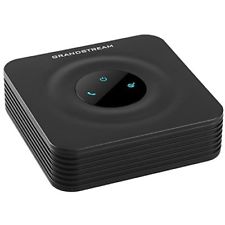 | HandyTone HT802 |
|
Grandstream HT802v2
 | HandyTone HT802v2 |
|
Mediatrix C7 and 4100 Series
 |
Mediatrix C7 and 4100 Series
Company: Media5 Corporation |
Polycom OBi300
 |
Polycom OBi300
Company: Polycom |
ReadyNet AC1000MS and AC1300MS
 |
ReadyNet AC1000MS and AC1300MS
Company: ReadyNet Solutions |
Legacy devices
|
